LEO surveillance
Our satellites operate in low Earth orbit, continuously scanning for space debris objects smaller than 10 cm — the invisible threat current systems miss.
/ 01
Watching over the orbits that matter.
Real-time sub-10 cm debris detection in low Earth orbit.
Space is a shared resource. We’re building the infrastructure to protect it.
Our satellites operate in low Earth orbit, continuously scanning for space debris objects smaller than 10 cm — the invisible threat current systems miss.
Proprietary radar arrays face outward from the spacecraft, giving us 360-degree situational awareness without relying on ground-based tracking.
Conjunction alerts are delivered in real time to satellite operators, launch providers, and space agencies worldwide.
Low Earth orbit is becoming increasingly congested with space debris. While large debris objects are tracked by ground-based radar, a critical gap exists in the 1–9 cm range — objects too small for most current systems to reliably detect, but large enough to cause catastrophic damage to operational satellites.
The highest-risk untracked debris band — too small to reliably track, large enough to destroy a satellite
Estimated value of space assets threatened by untracked debris in LEO annually
A single high-speed collision can trigger a cascading chain reaction, rendering entire orbital shells permanently unusable
TerraGuard is building a space-based radar system designed to detect and characterize sub-10 cm debris directly from orbit — closing the gap that ground-based infrastructure cannot reach.
Finalize radar architecture, satellite configuration, and regulatory filings
Validate RF systems, antenna performance, and signal processing algorithms
Deploy proof-of-concept CubeSat and calibrate radar payload in orbit
Detect and track debris objects across targeted orbital debris bands
Scale to a multi-satellite constellation with broader orbital coverage

Co-Founder & CEO
Tyler founded TerraGuard to address the growing challenge of tracking debris in low Earth orbit. As CEO, he leads the company's overall strategy, product direction, and external partnerships, working closely with the technical team to move TerraGuard from concept through development and deployment.
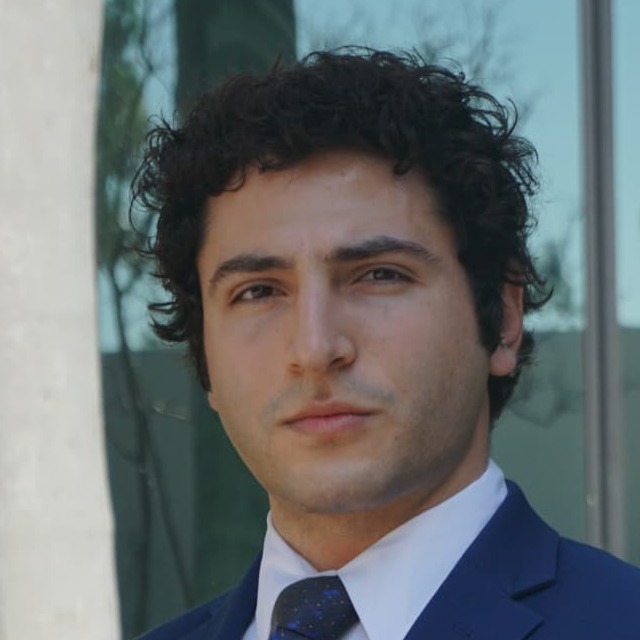
Co-Founder & COO
Jonathon oversees TerraGuard's business operations, finance, and execution. With a background in commercial real estate capital markets, he focuses on fundraising, financial planning, partnerships, and company operations while supporting the technical team as TerraGuard develops and commercializes its debris-tracking platform.
We're a team of operators, visionaries, and technology leaders united by one goal — making low Earth orbit safe and sustainable for generations to come.
Whether you're an investor, government agency, media organisation, or technology partner — we want to hear from you.
Have a question or want to work with us? Email us directly:
jonathontako@terraguard.online